
/ SERVICE #30
Space Agriculture, Simulation and Agri-Systems for Extreme Environments
Space Agriculture Agri-Systems for Extreme Environments Development, testing and deployment of technologies for growing crops in space, on other planets and in harsh Earth conditions orbital stations, lunar and Martian bases Earth-based analog conditions space technologies agro-engineering biotechnology automation and artificial intelligence life support systems space food x space
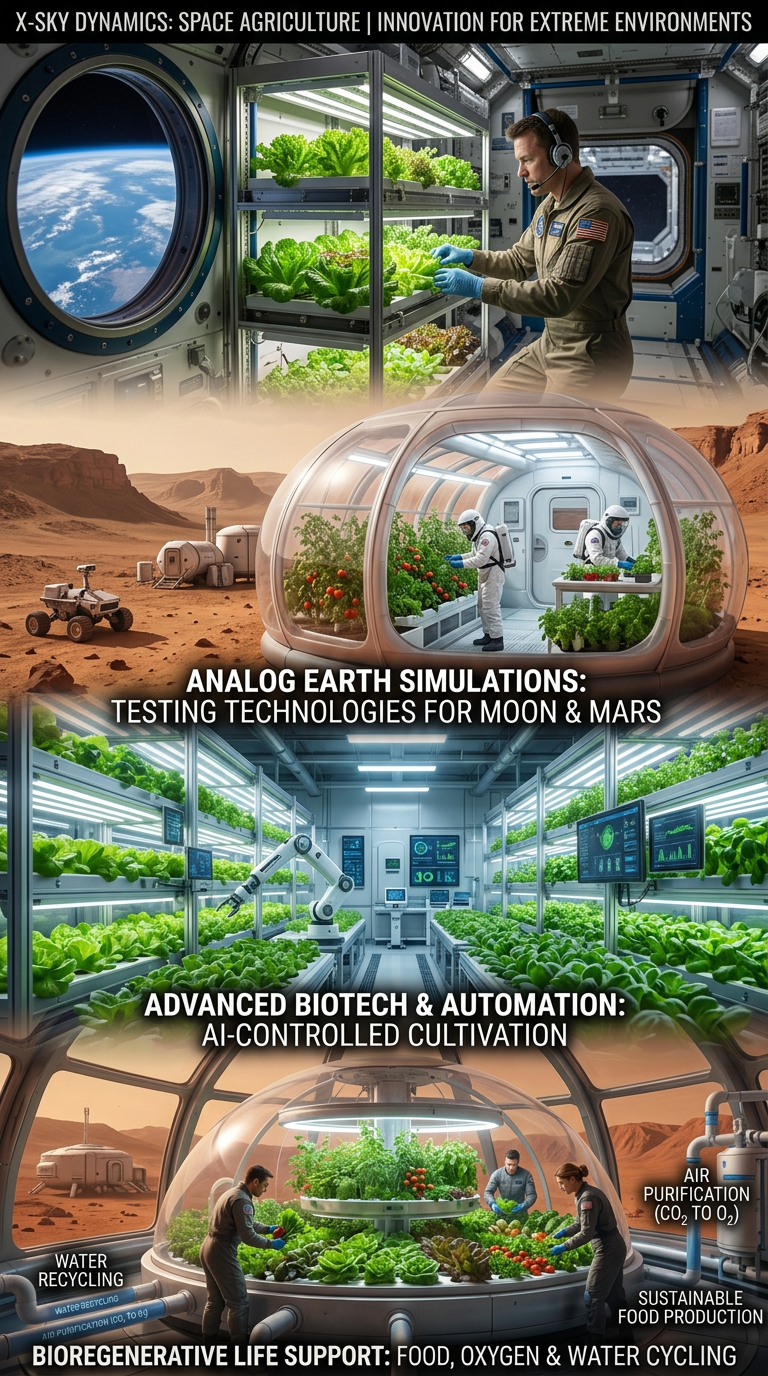
This activity represents a convergence of:
The primary objective is the creation of closed-loop, autonomous agricultural systems capable of operating independently from traditional resources and environmental conditions.
- space technologies
- agro-engineering
- biotechnology
- automation and artificial intelligence
- life support systems
What is Space Agriculture
Space agriculture involves the development of systems for plant cultivation under conditions such as:
- microgravity (orbit)
- low gravity (Moon, Mars)
- high radiation
- absence of soil
- limited resources (water, oxygen, nutrients)
These systems are part of bioregenerative life support systems, where plants:
Programs developed by NASA have demonstrated the viability of such systems for decades, forming the foundation of closed-loop life support concepts.
- produce oxygen
- recycle CO₂
- purify water
- provide food
Core Technological направления / Key Technology Directions
Soilless Systems (Hydroponics / Aeroponics)
Hydroponics is a cornerstone of scalable food production in constrained environments.
- soil-free cultivation using nutrient solutions
- minimal water consumption
- highly controlled environment
Controlled Environment Agriculture (CEA)
Experiments aboard the International Space Station confirm that plants can successfully grow under fully artificial environmental conditions.
- LED spectrum lighting (red/blue optimized)
- temperature and humidity control
- CO₂ and oxygen regulation
Orbital and Modular Greenhouses
These systems are designed around closed-loop cycles for water, air and nutrients, essential for lunar and Martian missions.
- sealed agricultural modules
- inflatable or container-based systems
- automated farming environments
AI and Autonomous Systems
AI-driven agriculture enables early detection of anomalies before visible symptoms appear.
- automated plant monitoring
- stress and growth analysis
- predictive agronomy
Genetics and Resilient Crops
Advanced research shows that plants behave differently in extraterrestrial soils, requiring tailored biological solutions.
- selection of radiation-resistant plants
- adaptation to low gravity environments
- use of microbial ecosystems
Planetary Simulation Systems
X-Sky Dynamics develops and deploys:
- Mars and Moon simulators (regolith, atmosphere)
- Deep Space simulation environments – long-duration cycles (decades to centuries) under zero or artificially induced gravity through rotation
- controlled climate chambers
- radiation simulation systems
- closed-loop agricultural modules
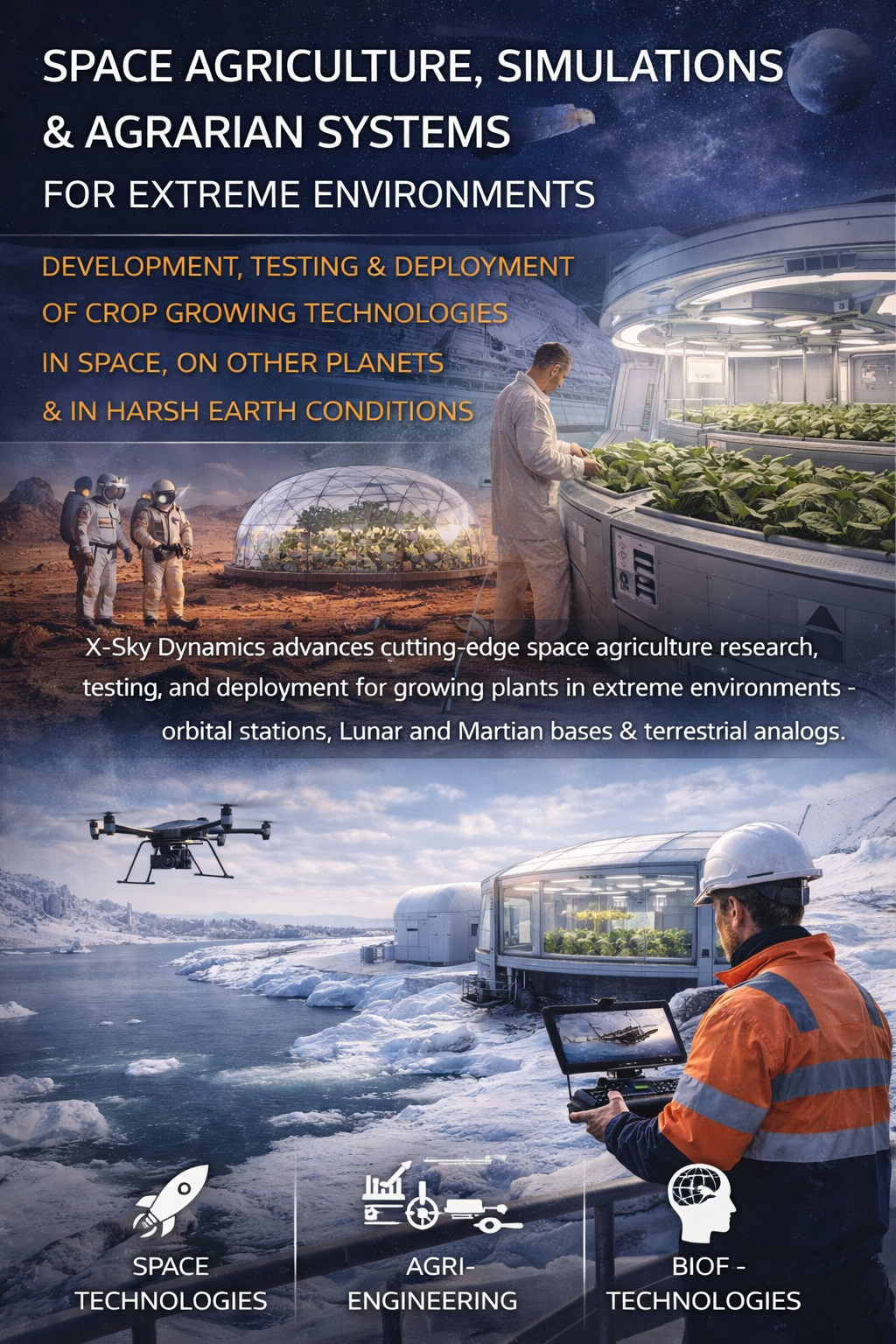
This enables:
- crop testing
- technology validation
- mission readiness preparation
Integration with X-Sky Dynamics Systems
Satellite – Drone – Agriculture (Hybrid Ecosystem)
X-Sky Dynamics develops a unified operational ecosystem:
- satellites → monitoring, analytics, closed-loop data systems
- drones → local inspection and maintenance
- agricultural modules → production
This creates a new class of systems:
Space-Agriculture Integrated Systems
Integration with Marine and Autonomous Systems
- USV (unmanned surface vessels) → water resource monitoring
- ROV/AUV → underwater ecosystem analysis
- floating farms → hybrid water-agriculture systems
Applications in Space and on Earth
Space Missions
- orbital stations
- Mars missions
- lunar bases
- Deep Space missions without Earth return capability
Planetary Colonies
- food production
- atmospheric regeneration
- resource recycling
Earth-Based Applications (Spin-offs)
- desert environments
- polar regions
- offshore platforms
- disaster zones
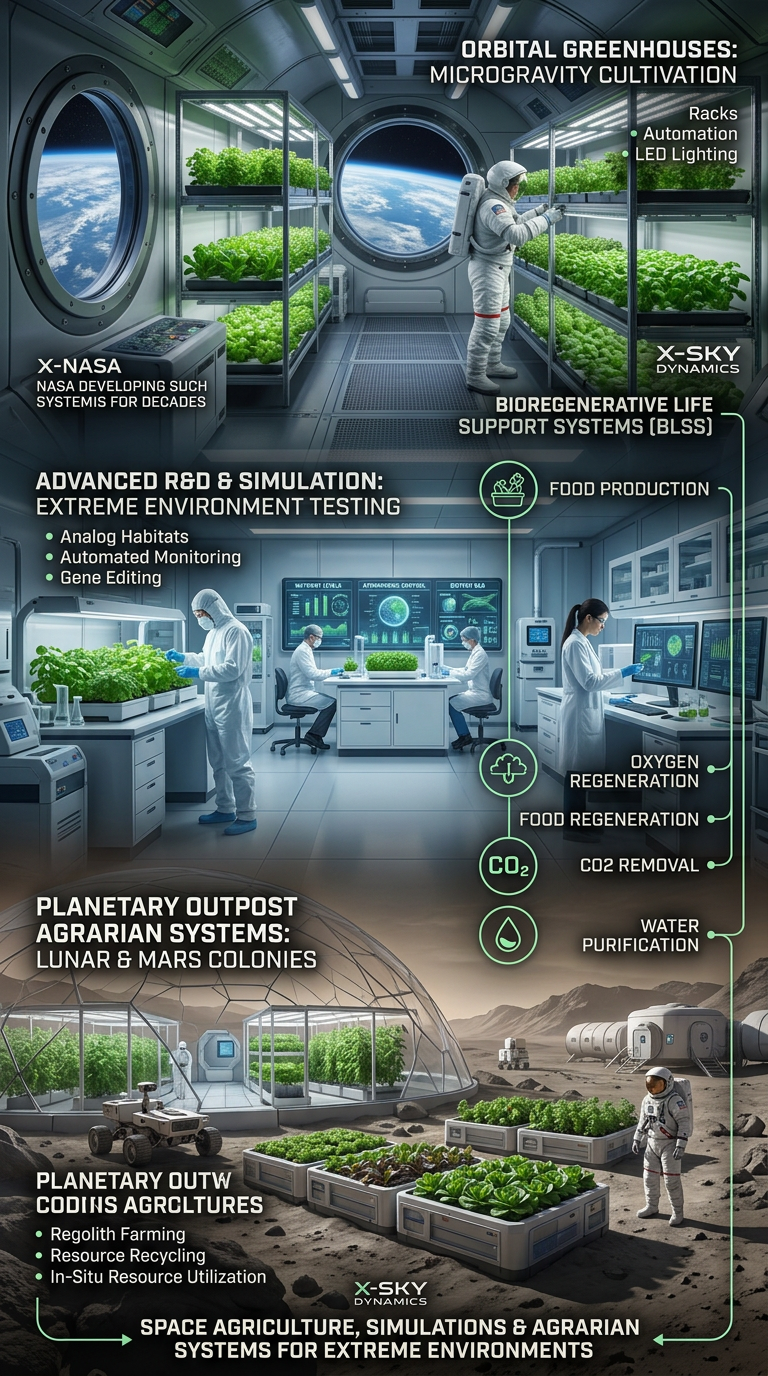
Example Scenarios
Scenario 1: Martian Base
- closed greenhouse
- autonomous production
- AI control
Result: independent food system
Scenario 2: Orbital Farm
- microgravity environment
- LED lighting
- full automation
Result: sustainable food production in orbit
Scenario 3: Earth Analog
- desert environment
- minimal water usage
- autonomous agriculture
Result: extreme-environment farming
Scenario 4: Deep Space – One Way Mission
- closed-loop agriculture
- autonomous production
- AI control
- long-duration sustainability (decades or centuries)
What X-Sky Dynamics Provides
- development of space agriculture systems
- simulation environments for research
- integration with satellites and UAV systems
- design of closed-loop agricultural ecosystems
- AI-driven analytics
- training and scientific collaboration
Key Advantages
- autonomous food production
- integration with space-tech systems
- AI-driven control
- closed resource cycles
- dual-use (space and Earth applications)
Strategic Vision
Space agriculture is no longer theoretical—it is a critical enabling technology for long-term human presence beyond Earth.
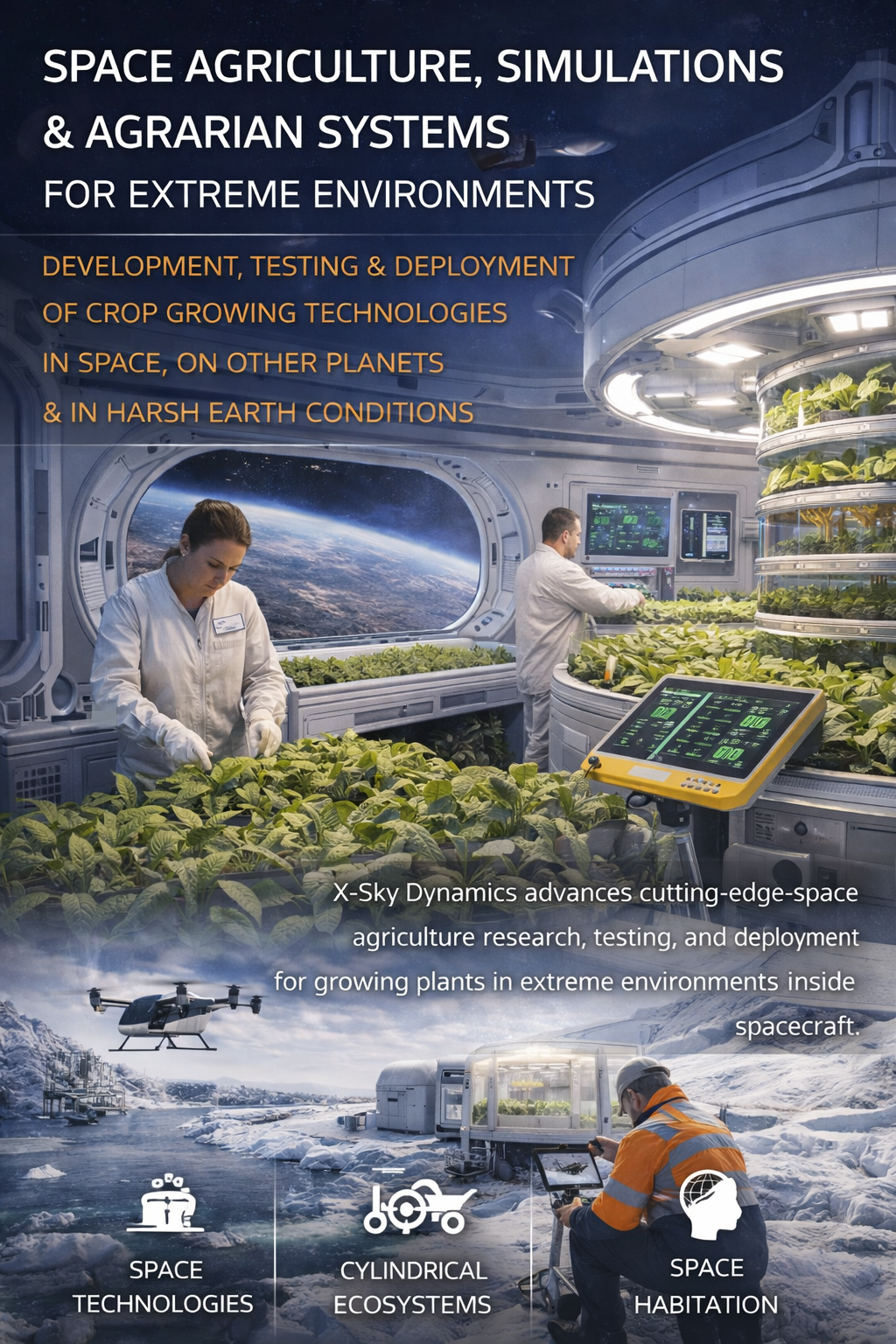
These systems will:
- serve as the foundation for planetary colonization
- reduce dependency on resupply missions
- enable fully autonomous ecosystems
This represents a transition from traditional agriculture to:
Self-sustaining planetary ecosystems
Strategic Pitch – ESA /NASA/ Investors Perspective
X-Sky Dynamics positions itself at the intersection of aerospace engineering, autonomous systems and next-generation agriculture.
We are developing:
- modular, scalable space-ready agricultural systems
- hybrid satellite–drone–agriculture ecosystems
- long-duration Deep Space sustainability solutions
Investment Highlights:
- aligned with future programs of European Space Agency, NASA and global private space initiatives
- dual-use technology (space + terrestrial markets)
- scalable from research modules to full planetary systems
- strong integration with UAV, AI and satellite infrastructure
Market & Strategic Relevance:
- space colonization programs (Moon, Mars)
- defense & автономни екосистеми
- climate-resilient agriculture on Earth
- disaster recovery and remote infrastructure
Vision:
To develop the first fully integrated operational ecosystem where:
- satellites provide global awareness
- drones provide local intelligence
- autonomous agriculture provides sustainability
Enabling:
Next-generation autonomous life-support ecosystems for Earth and beyond
Get in Touch
[ CONTACT US ]