/ SERVICE #12
Autonomous Drone Systems with Dock Stations for Monitoring, Early Fire Detection and Area Security
Early Fire Detection and Prevention Autonomous Drone Systems with Dock Stations for Monitoring, Early Fire Detection and Area Security Intelligent infrastructure for 24/7 aerial control and real-time response Advanced Government and Military Applications of Autonomous Drone Systems with Dock Stations Strategic infrastructure for security, prevention, and crisis management
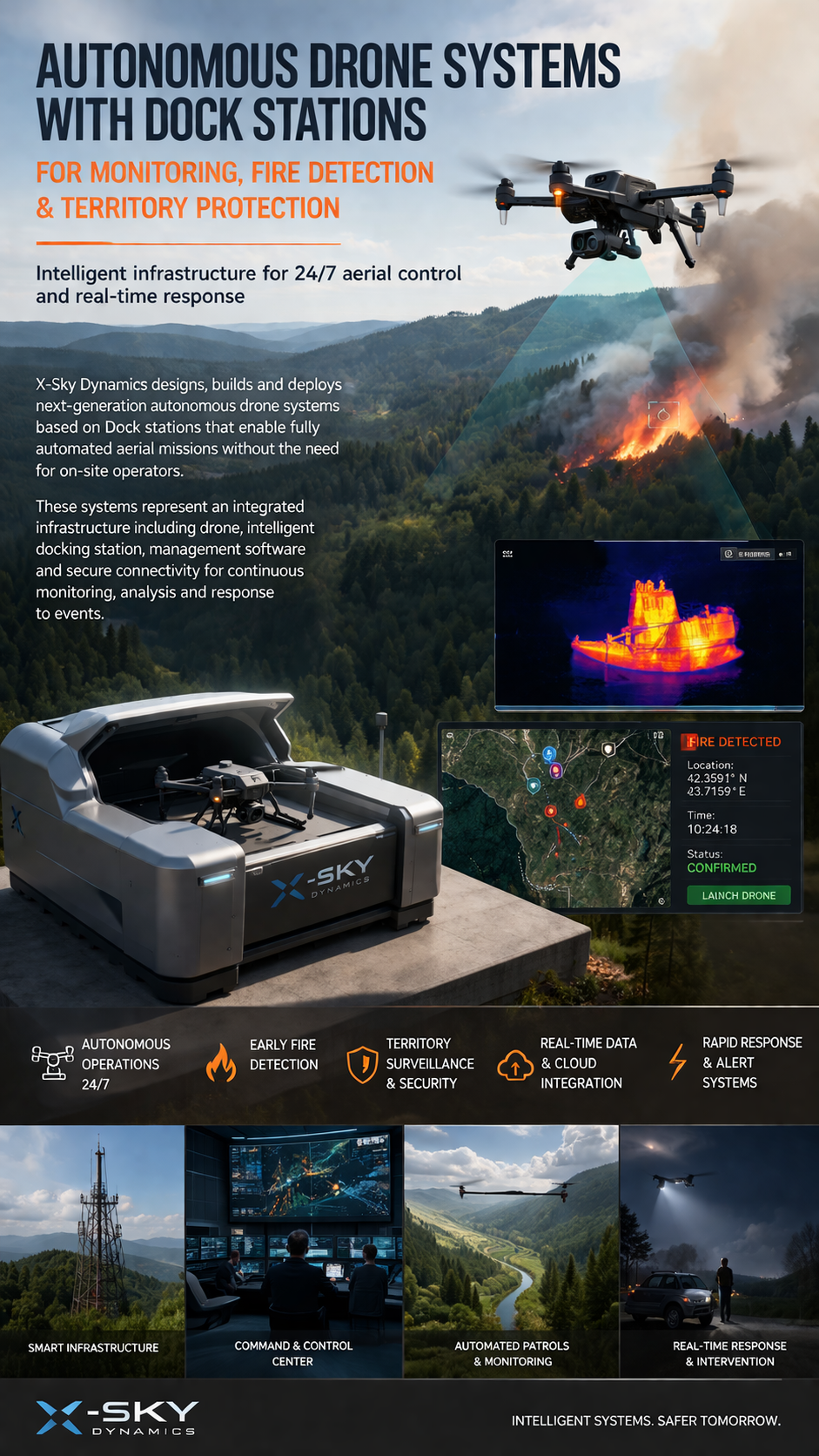
X-Sky Dynamics offers the design, development, and deployment of next-generation autonomous drone systems based on Dock stations, enabling fully automated aerial missions without the need for a permanent on-site operator. These systems represent an integrated infrastructure, including a drone, intelligent docking station, control software, and communication connectivity, allowing continuous monitoring, analysis, and response to emerging events.
Advanced Government and Military Applications of Autonomous Drone Systems with Dock Stations
Strategic infrastructure for security, prevention, and crisis management
In addition to standard industrial applications, autonomous drone systems with Dock stations can be deployed as a key element of national, regional, or site-specific infrastructure for security and risk management. These systems enable the creation of a network-based aerial surveillance and response system, operating in coordination with government institutions, military structures, fire services, and civil protection units.
Integrated Aerial Network (Drone-in-a-Box Network Concept)
By deploying multiple Dock stations across a given region, the following is achieved:
- a distributed network of autonomous aerial units
- overlapping coverage without “blind zones”
- the ability to automatically transfer missions between stations
- centralized management from one or multiple command centers
This architecture enables:
- continuous monitoring of strategic areas
- rapid localization of events
- automatic activation of additional resources
How the System Works
Dock systems function as fully autonomous aerial bases:
Systems such as DJI Dock 3 enable 24/7 autonomous operations, including remote control and monitoring from anywhere in the world.
- the drone is stored, charged, and protected in the docking station
- it automatically executes predefined missions
- it returns for charging and preparation for the next flight
- it transmits data in real time to a command center
Integration with Government and Military Systems
The systems can be integrated with:
- national early warning systems
- border control systems
- military command and communication systems
- crisis management systems
- fire and rescue services
Additionally:
- encrypted communication capabilities
- operation within secure networks
- access control and authorization levels
Early Fire Detection and Prevention
One of the key applications of these systems is early fire detection in:
- forest areas
- agricultural land
- industrial zones
- energy infrastructure
Using thermal cameras:
Such systems enable a transition from reactive to proactive risk management, significantly reducing damage and response time.
- temperature anomalies are detected even before smoke appears
- smoldering hotspots and potential risks are identified
- automatic alerts are triggered to responsible authorities
Automated Response Scenarios (Operational Scenarios)
Scenario 1: Early Detection and Suppression of a Wildfire
1. The Dock system performs an automated patrol
2. The thermal sensor detects an anomaly
3. An AI algorithm confirms a potential fire
4. The system automatically:
- sends an alert to the command center
- marks GPS coordinates
- activates live streaming
5. Upon authorization:
- a payload drone (fire response UAV) is deployed
- the drone delivers and releases a fire suppression agent
- performs initial localized extinguishing
6. If necessary:
- ground teams are deployed
- additional aerial assets are engaged
Result: the fire is contained at an early stage before spreading
Scenario 2: Industrial Incident / авария
- anomaly detection (temperature, smoke, movement)
- automatic drone dispatch for inspection
- real-time video transmission
- risk assessment before team deployment
Scenario 3: Critical Infrastructure Security
- automated patrols around facilities
- detection of unauthorized presence
- automatic alerting of security/services
- real-time tracking of objects
Scenario 4: Maritime and Coastal Operations
- monitoring of ports and water areas
- detection of incidents or spills
- rapid situation reconnaissance
- coordination with maritime and rescue services
Integration of Payload Drones (Autonomous Response Layer)
A second layer can be added to Dock systems – response drones with payload capabilities, activated under specific conditions.
These drones can:
- deliver fire suppression materials
- deploy fire extinguishing agents
- transport emergency equipment
- deliver medical supplies
- support rescue operations
Characteristics:
- automatic takeoff upon authorization
- precise positioning via RTK
- synchronized operation with surveillance drones
- integration into the overall management system
Automation and Artificial Intelligence
The systems can be configured for:
In real-world implementations, such systems use machine learning algorithms for automatic fire detection without continuous human monitoring.
- automated scheduled patrol missions
- AI-based detection of:
- smoke and fire
- unauthorized activities
- movement in protected areas
- automatic alert and notification systems
- integration with security and management systems
- fire risk prediction
- climate and thermal data analysis
- automated decision support systems
Coverage and Efficiency
- One dock can cover several kilometers radius (2–3 km operationally)
- Thermal detection can reach up to 5 km effective observation range
- A single mission can cover hundreds to over 1,000 hectares
When building a network of stations:
- full regional or site coverage is achieved
- continuous monitoring without blind zones is ensured
- the system operates as an integrated aerial surveillance network
System Security and Resilience
- operation in GPS-denied environments (when required)
- protection against interference (anti-jamming / anti-spoofing concepts)
- redundant communication channels
- ability to operate autonomously in case of signal loss
Strategic Advantages
- development of a proactive security system
- reduction of response time to minutes
- significant limitation of damage
- resource optimization (reduced need for field personnel)
- improved inter-agency coordination
Applications
Forestry and Fire Prevention
- early fire detection
- monitoring of high-risk areas
- control of illegal activities
Agriculture
- monitoring of large areas
- detection of fires and overheating
- crop condition analysis
Industrial Facilities
- perimeter security
- facility monitoring
- detection of temperature anomalies
Energy Infrastructure
- monitoring of power lines
- substation control
- early fault detection
Municipalities and Government Structures
- monitoring of populated areas
- disaster response
- crisis management
Role of X-Sky Dynamics
X-Sky Dynamics does not simply deploy technologies, but builds:
- complete operational concepts (CONOPS)
- system architecture
- integration with real institutions
- personnel training
- system maintenance and upgrades
Key Technological Advantages
- 24/7 autonomous operation without on-site operator
- Automated takeoff, landing, and charging
- Operation in extreme weather conditions (-20°C to +50°C)
- Thermal and multisensor cameras
- RTK positioning for high precision
- LiDAR and laser systems for advanced analysis
- Integration with cloud platforms (e.g., FlightHub 2)
Additional Capabilities and Integrations
- development of a central command center
- integration with:
- video surveillance systems
- IoT sensors
- fire protection systems
- GIS platforms
- automatic report generation and analytics
- live streaming to institutions and teams
- capability to manage multiple dock stations simultaneously
Client Benefits
- Immediate response to incidents
- Early detection of fires and risks
- Reduction of damages and operational costs
- Improved coordination between institutions
- Coverage of large and hard-to-reach areas
- Minimal need for human resources
Why X-Sky Dynamics
Design and deployment of complete systems from the ground up
Integration of hardware, software, and operational processes
Experience in industrial, governmental, and critical projects
Ability to deliver customized solutions based on territory requirements
Focus on automation, security, and efficiency
Conclusion (Strategic Vision)
Autonomous drone systems with Dock stations represent the next generation of infrastructure for security, surveillance, and crisis management. In combination with payload drones and AI analysis, they become an active response system capable not only of detecting problems, but addressing them at an early stage. This represents a transition from observation to autonomous action and intelligent risk management. These systems enable continuous control, early detection of critical events, and real-time decision-making, significantly enhancing efficiency and safety in both industrial and public environments.
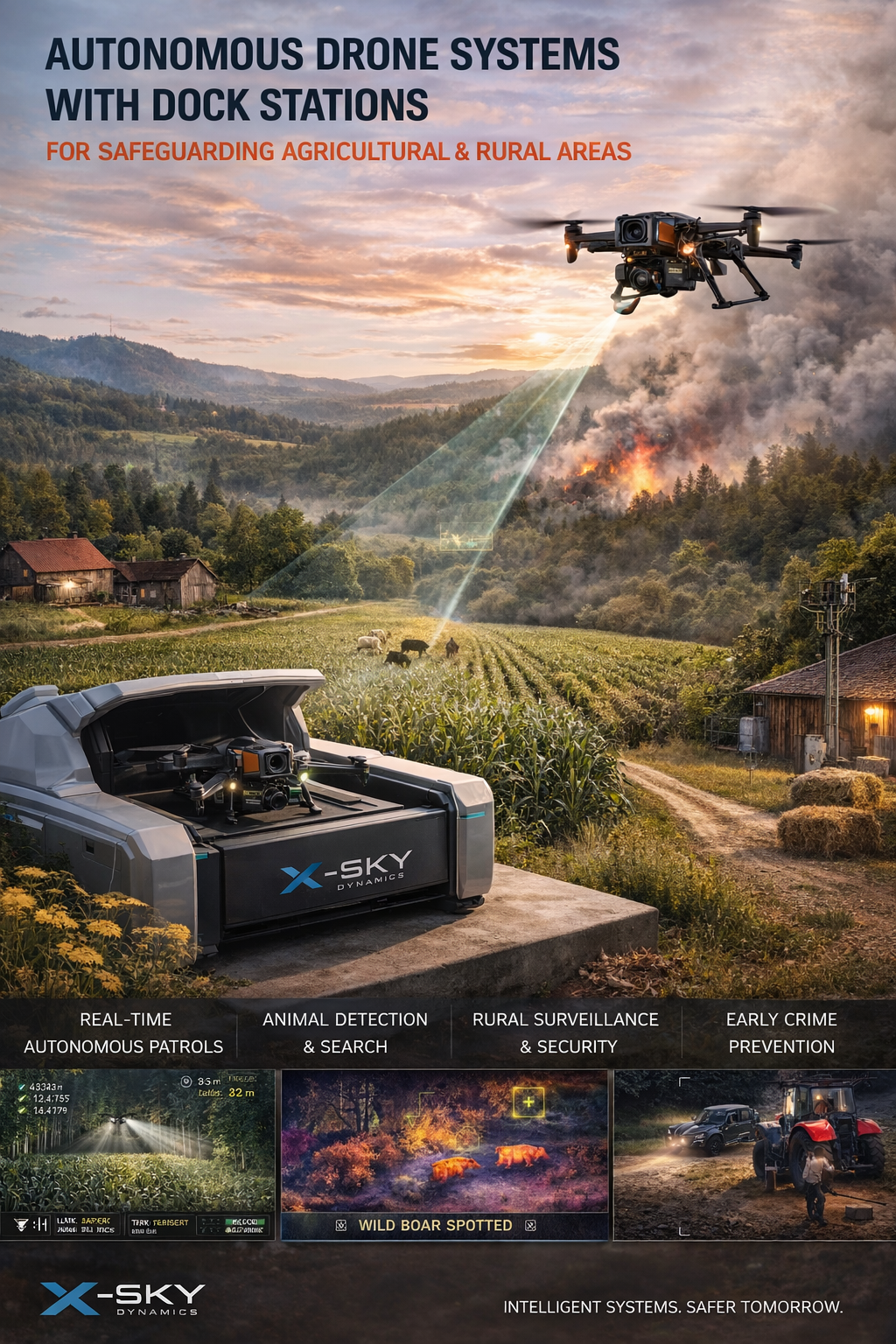
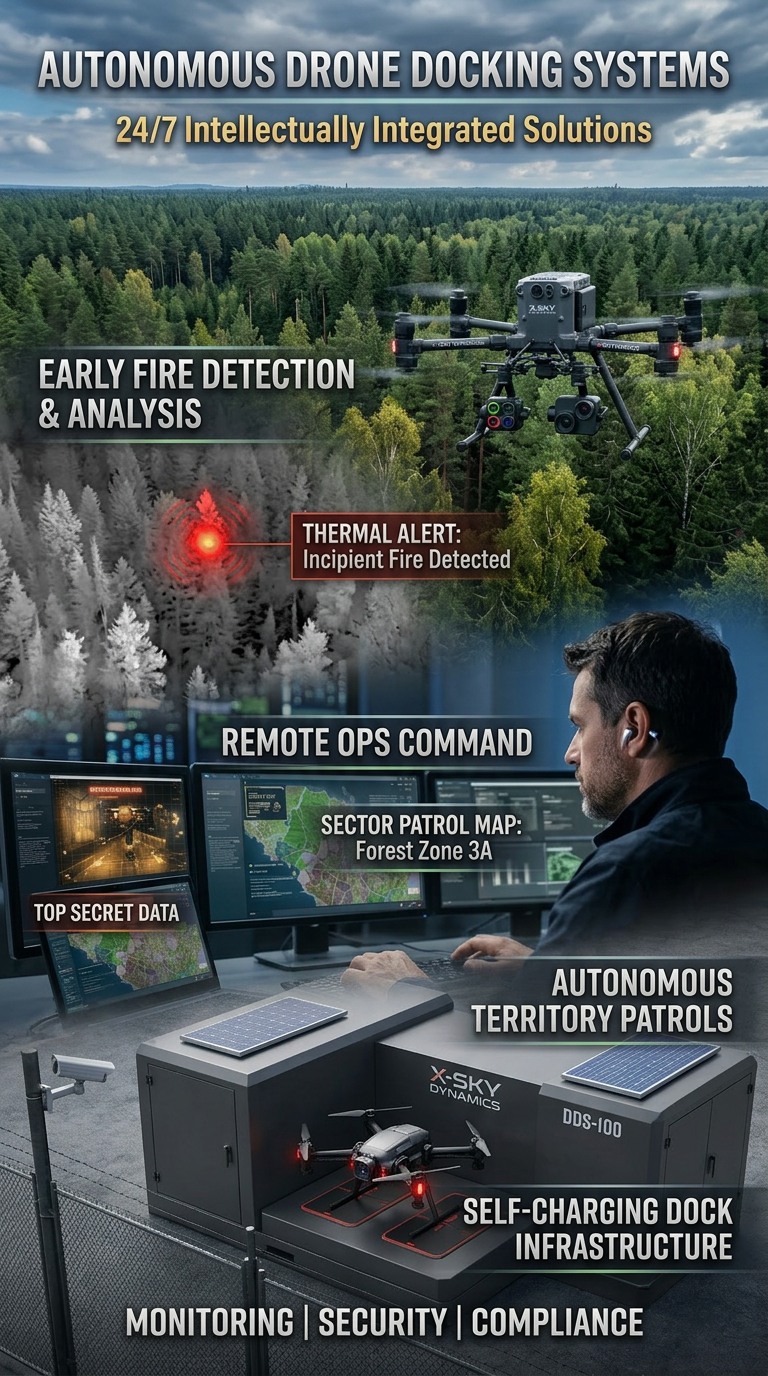
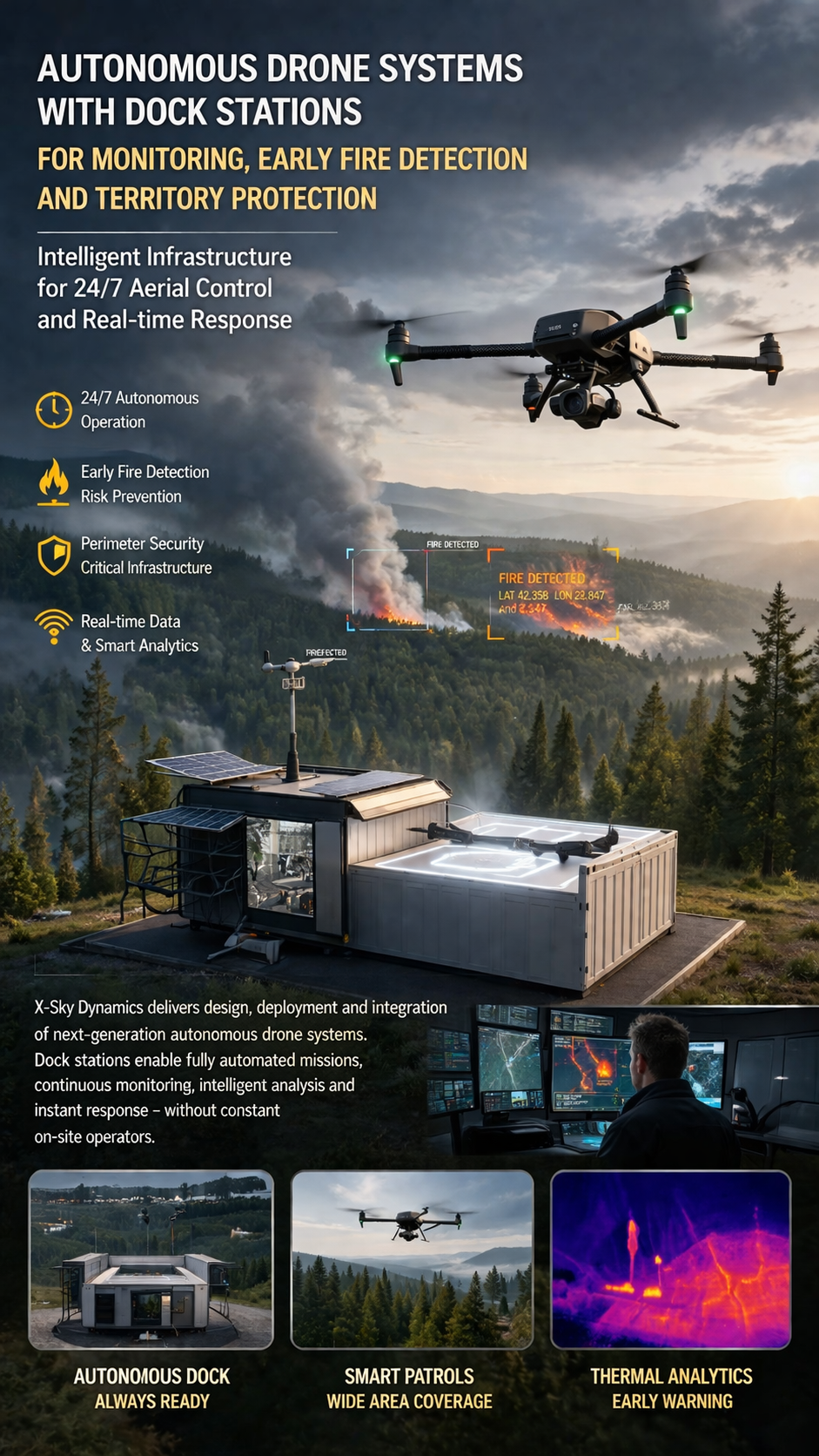
X-Sky Dynamics offers the design, development, and deployment of next-generation autonomous drone systems based on Dock stations, enabling fully automated aerial missions without the need for a permanent on-site operator. These systems represent an integrated infrastructure, including a drone, intelligent docking station, control software, and communication connectivity, allowing continuous monitoring, analysis, and response to emerging events.
Advanced Government and Military Applications of Autonomous Drone Systems with Dock Stations
Strategic infrastructure for security, prevention, and crisis management
In addition to standard industrial applications, autonomous drone systems with Dock stations can be deployed as a key element of national, regional, or site-specific infrastructure for security and risk management. These systems enable the creation of a network-based aerial surveillance and response system, operating in coordination with government institutions, military structures, fire services, and civil protection units.
This architecture enables:
- continuous monitoring of strategic areas
- rapid localization of events
- automatic activation of additional resources
Integration with Government and Military Systems
The systems can be integrated with:
- national early warning systems
- border control systems
- military command and communication systems
- crisis management systems
- fire and rescue services
Early Fire Detection and Prevention
One of the key applications of these systems is early fire detection in:
- forest areas
- agricultural land
- industrial zones
- energy infrastructure
Automated Response Scenarios (Operational Scenarios)
Scenario 1: Early Detection and Suppression of a Wildfire
1. The Dock system performs an automated patrol
3. An AI algorithm confirms a potential fire
5. Upon authorization:
- a payload drone (fire response UAV) is deployed
- the drone delivers and releases a fire suppression agent
- performs initial localized extinguishing
Result: the fire is contained at an early stage before spreading
Scenario 3: Critical Infrastructure Security
- automated patrols around facilities
- detection of unauthorized presence
- automatic alerting of security/services
- real-time tracking of objects
Scenario 4: Maritime and Coastal Operations
- monitoring of ports and water areas
- detection of incidents or spills
- rapid situation reconnaissance
- coordination with maritime and rescue services
Characteristics:
- automatic takeoff upon authorization
- precise positioning via RTK
- synchronized operation with surveillance drones
- integration into the overall management system
The systems can be configured for:
In real-world implementations, such systems use machine learning algorithms for automatic fire detection without continuous human monitoring.
- automated scheduled patrol missions
- AI-based detection of:
- smoke and fire
- unauthorized activities
- movement in protected areas
- automatic alert and notification systems
- integration with security and management systems
- fire risk prediction
- climate and thermal data analysis
- automated decision support systems
Strategic Advantages
- development of a proactive security system
- reduction of response time to minutes
- significant limitation of damage
- resource optimization (reduced need for field personnel)
- improved inter-agency coordination
Agriculture
- monitoring of large areas
- detection of fires and overheating
- crop condition analysis
Energy Infrastructure
- monitoring of power lines
- substation control
- early fault detection
Role of X-Sky Dynamics
X-Sky Dynamics does not simply deploy technologies, but builds:
- complete operational concepts (CONOPS)
- system architecture
- integration with real institutions
- personnel training
- system maintenance and upgrades
Additional Capabilities and Integrations
- development of a central command center
- integration with:
- video surveillance systems
- IoT sensors
- fire protection systems
- GIS platforms
- automatic report generation and analytics
- live streaming to institutions and teams
- capability to manage multiple dock stations simultaneously
Why X-Sky Dynamics
Design and deployment of complete systems from the ground up
Experience in industrial, governmental, and critical projects
Focus on automation, security, and efficiency
Integrated Aerial Network (Drone-in-a-Box Network Concept)
By deploying multiple Dock stations across a given region, the following is achieved:
- a distributed network of autonomous aerial units
- overlapping coverage without “blind zones”
- the ability to automatically transfer missions between stations
- centralized management from one or multiple command centers
How the System Works
Dock systems function as fully autonomous aerial bases:
Systems such as DJI Dock 3 enable 24/7 autonomous operations, including remote control and monitoring from anywhere in the world.
- the drone is stored, charged, and protected in the docking station
- it automatically executes predefined missions
- it returns for charging and preparation for the next flight
- it transmits data in real time to a command center
Additionally:
- encrypted communication capabilities
- operation within secure networks
- access control and authorization levels
Using thermal cameras:
Such systems enable a transition from reactive to proactive risk management, significantly reducing damage and response time.
- temperature anomalies are detected even before smoke appears
- smoldering hotspots and potential risks are identified
- automatic alerts are triggered to responsible authorities
2. The thermal sensor detects an anomaly
4. The system automatically:
- sends an alert to the command center
- marks GPS coordinates
- activates live streaming
6. If necessary:
- ground teams are deployed
- additional aerial assets are engaged
Scenario 2: Industrial Incident / авария
- anomaly detection (temperature, smoke, movement)
- automatic drone dispatch for inspection
- real-time video transmission
- risk assessment before team deployment
Integration of Payload Drones (Autonomous Response Layer)
A second layer can be added to Dock systems – response drones with payload capabilities, activated under specific conditions.
These drones can:
- deliver fire suppression materials
- deploy fire extinguishing agents
- transport emergency equipment
- deliver medical supplies
- support rescue operations
Automation and Artificial Intelligence
Coverage and Efficiency
- One dock can cover several kilometers radius (2–3 km operationally)
- Thermal detection can reach up to 5 km effective observation range
- A single mission can cover hundreds to over 1,000 hectares
When building a network of stations:
- full regional or site coverage is achieved
- continuous monitoring without blind zones is ensured
- the system operates as an integrated aerial surveillance network
System Security and Resilience
- operation in GPS-denied environments (when required)
- protection against interference (anti-jamming / anti-spoofing concepts)
- redundant communication channels
- ability to operate autonomously in case of signal loss
Applications
Forestry and Fire Prevention
- early fire detection
- monitoring of high-risk areas
- control of illegal activities
Industrial Facilities
- perimeter security
- facility monitoring
- detection of temperature anomalies
Municipalities and Government Structures
- monitoring of populated areas
- disaster response
- crisis management
Key Technological Advantages
- 24/7 autonomous operation without on-site operator
- Automated takeoff, landing, and charging
- Operation in extreme weather conditions (-20°C to +50°C)
- Thermal and multisensor cameras
- RTK positioning for high precision
- LiDAR and laser systems for advanced analysis
- Integration with cloud platforms (e.g., FlightHub 2)
Client Benefits
- Immediate response to incidents
- Early detection of fires and risks
- Reduction of damages and operational costs
- Improved coordination between institutions
- Coverage of large and hard-to-reach areas
- Minimal need for human resources
Integration of hardware, software, and operational processes
Ability to deliver customized solutions based on territory requirements
Conclusion (Strategic Vision)
Autonomous drone systems with Dock stations represent the next generation of infrastructure for security, surveillance, and crisis management. In combination with payload drones and AI analysis, they become an active response system capable not only of detecting problems, but addressing them at an early stage. This represents a transition from observation to autonomous action and intelligent risk management. These systems enable continuous control, early detection of critical events, and real-time decision-making, significantly enhancing efficiency and safety in both industrial and public environments.
Get in Touch
[ CONTACT US ]