/ SERVICE #33
Counter-UAS, Laser and Kinetic Systems – Detection, Neutralization and Airspace Protection
CounterUAS, Laser and Kinetic Systems Detection, Neutralization and Airspace Protection Integrated solutions for protection against unmanned threats in real time identification, tracking and neutralization of unmanned aerial vehicles across various environments – industrial, urban, military and strategic sites Counter-UAS systems are a комплекс of technologies enabling: drone detection identification and classification real-time tracking neutralization or control
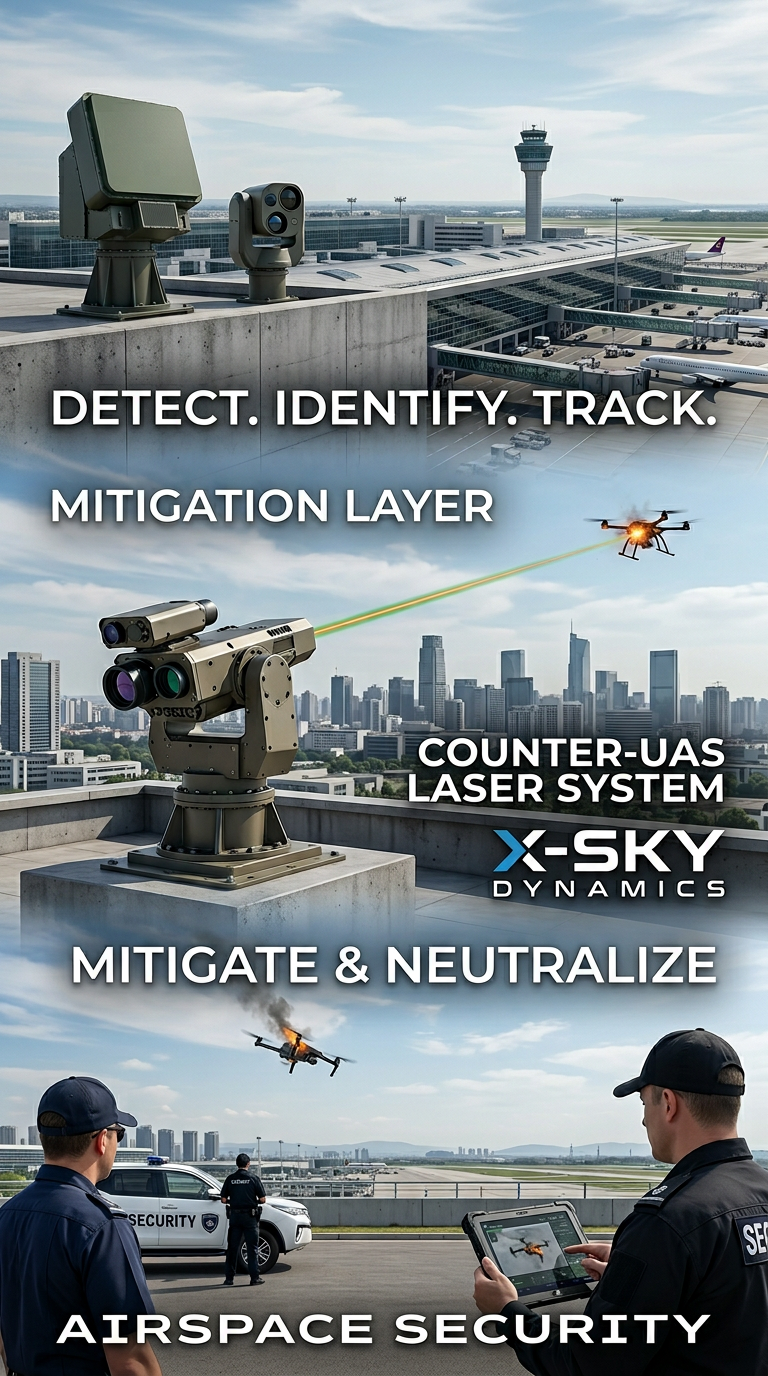
The main objective is the development of:
Layered Air Defence Against UAVs
What Counter-UAS Systems Represent
Counter-UAS systems are a комплекс of technologies enabling:
- drone detection
- identification and classification
- real-time tracking
- neutralization or control
They include a combination of:
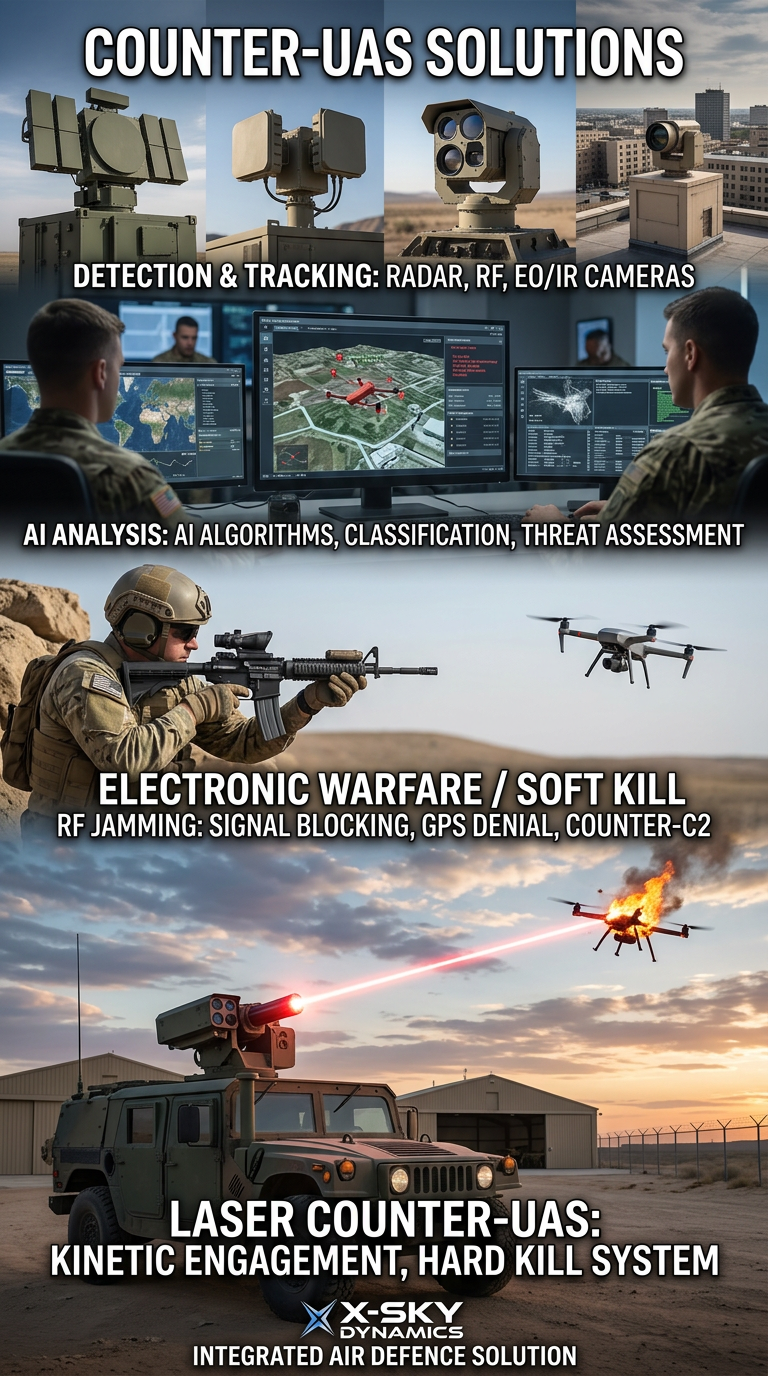
- sensors (radar, RF, cameras, acoustic)
- AI analytics
- communication systems
- mitigation mechanisms
Modern systems combine multiple technologies for higher accuracy and reliability
Core Components of a Counter-UAS System
Detection Systems (Detection Layer)
- radar systems (short/medium range)
- RF detectors (detecting communication between drone and operator)
- EO/IR cameras (visual and thermal recognition)
- acoustic sensors
New AI algorithms enable detection of small drones even in complex environments
AI Analysis and Classification
- drone type recognition
- behavioral analysis
- threat assessment
- automatic scenario activation
Modern systems use deep learning for high-accuracy micro-drone detection
Mitigation Methods (Mitigation / Engagement Layer)
Counter-UAS systems are divided into:
Soft Kill and Hard Kill
1. Electronic Warfare / Soft Kill Systems
RF Jammer Systems
- jamming communication between drone and operator
- blocking GPS signals (GNSS denial)
The drone:
- loses control
- returns to home point
- or performs forced landing
Example:
- fixed and portable systems with ranges of 12–30 km
- lightweight handheld anti-drone “guns” with range up to ~2 km
Spoofing / Hijacking Systems
- takeover of drone control
- forced landing
- data extraction
Used by:
- law enforcement
- intelligence agencies
- event protection teams
2. Hard Kill Systems (Physical Destruction)
Kinetic Systems
- interceptor drones
- net capture systems
- projectile systems
Used for:
- safe takedown
- protection of populated areas
Interceptor UAVs
- autonomous or operator-controlled
- using:
- nets
- direct collision
- AI tracking
Increasingly used in:
- military operations
- airport protection
- event security
Artillery / Airburst Systems
- programmable ammunition
- destruction through fragmentation
3. Laser Counter-UAS Systems (Directed Energy Weapons)
(including portable systems)
High-Energy Laser (HEL)
- neutralizes drones through thermal destruction
- high precision
- minimal collateral damage
- range up to several kilometers
- capable of penetrating metal components
Advantages:
- near-unlimited “ammunition”
- low cost per shot
- extremely fast response
4. Microwave / EMP Systems
- disable drone electronics
- effective against swarm attacks
New systems can neutralize multiple drones simultaneously using electromagnetic pulses
5. Portable Counter-UAS Systems
Handheld Anti-Drone Guns
- compact
- rapid deployment
- RF or GPS jamming
Increasingly popular solutions from Chinese manufacturers include:
- jammer rifles
- portable laser systems
- backpack-based mobile solutions
Operational Capability Framework (OCF)
X-Sky Dynamics provides counter-UAS solutions developed in accordance with:
- Capability-Based Planning (CBP)
- NATO Interoperability Standards
- Multi-Domain Operations (MDO)
Systems are designed as:
mission-ready, modular and scalable Counter-UAS capabilities
Interoperability and Integration
Systems can operate alongside:
- national security systems
- radar and air surveillance networks
- electronic warfare (EW) systems
Supporting:
- data fusion
- shared situational awareness
- multi-agency coordination
Command and Control (C2 Integration)
- centralized command
- distributed control architecture
- integration with command centers
Enables:
- multi-system control
- automatic task allocation
- threat prioritization
Rules of Engagement (RoE) and Escalation Logic
Systems can be configured based on:
- threat levels
- engagement rules
- legal frameworks
Supporting:
- escalation matrix
- automated scenarios
- human-in-the-loop / human-on-the-loop modes
Layered Defense Concept
Modern systems combine:
1. Detection (Radar + RF + AI)
2. Identification
3. Tracking
4. Engagement (Soft + Hard Kill)
Resulting in:
Integrated Counter-UAS Shield
Integration with X-Sky Dynamics Systems
Counter-UAS solutions can be integrated with:
- Dock stations
- autonomous UAV systems
- satellite platforms
- command centers
- security and monitoring systems
Enabling:
- automated detection
- autonomous response
- centralized control
Applications
Industrial Sites
- protection against industrial espionage
- airspace control
Energy Sector
- protection of substations and infrastructure
Maritime Sector
- port protection
- vessel protection
Urban Security
- events
- airports
- government buildings
Military Applications
- base protection
- countering drone swarm attacks
- integration with air defense systems
What X-Sky Dynamics Provides
- threat analysis
- C-UAS architecture design
- system supply (including leading Chinese manufacturers)
- integration and deployment
- personnel training
- operational testing
- maintenance and upgrades
Key Advantages
- real-time protection
- rapid response
- high precision
- system integration
- AI automation
- cost optimization
Strategic Vision
With the evolution of drone technologies, counter-UAS systems are becoming:
a fundamental element of national and industrial security
Conclusion
Counter-UAS systems are now:
a key component of modern air and infrastructure defense
X-Sky Dynamics delivers:
integrated, scalable and mission-ready Counter-UAS solutions, capable of operating in:
- civilian environments
- critical infrastructure
- military operations
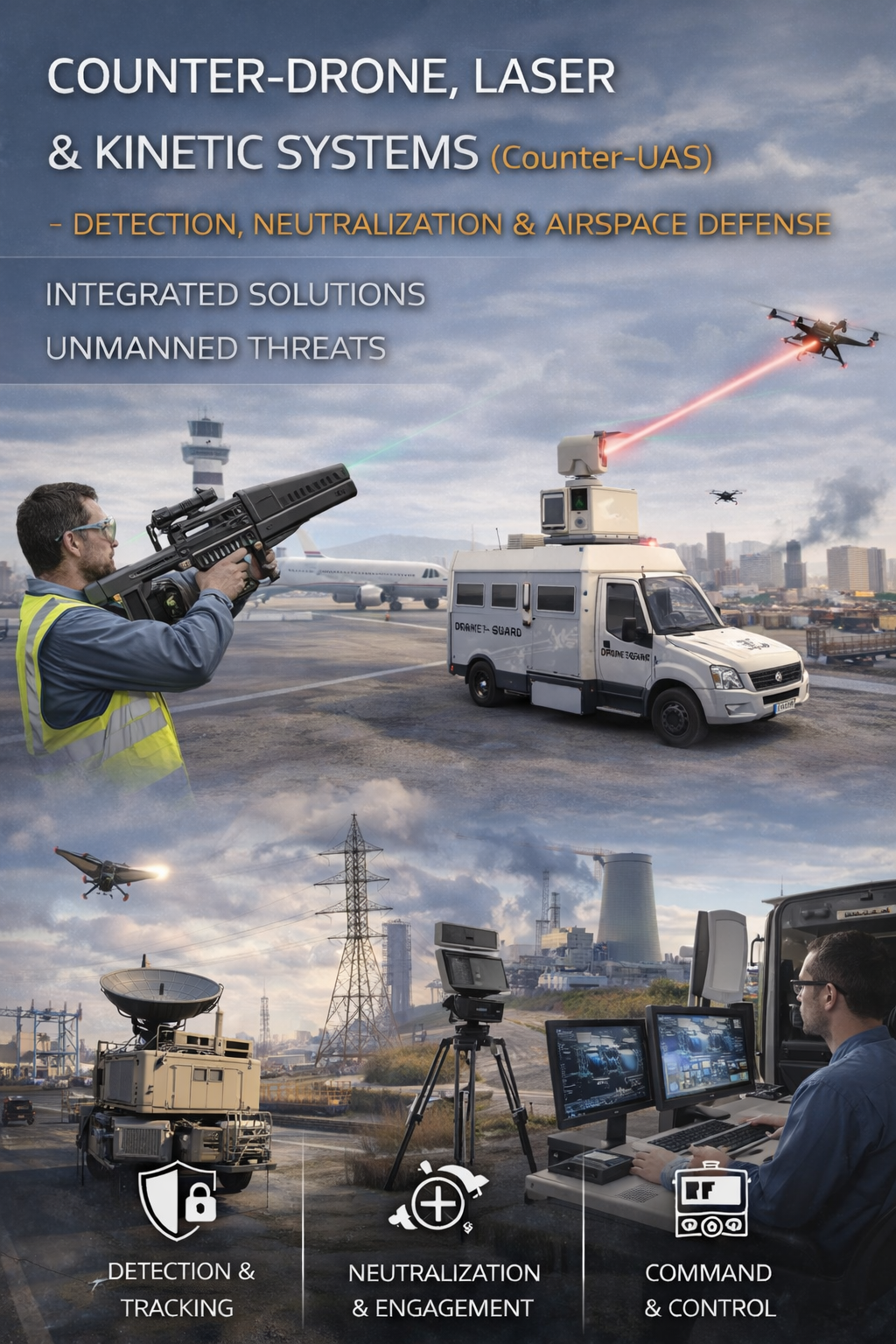
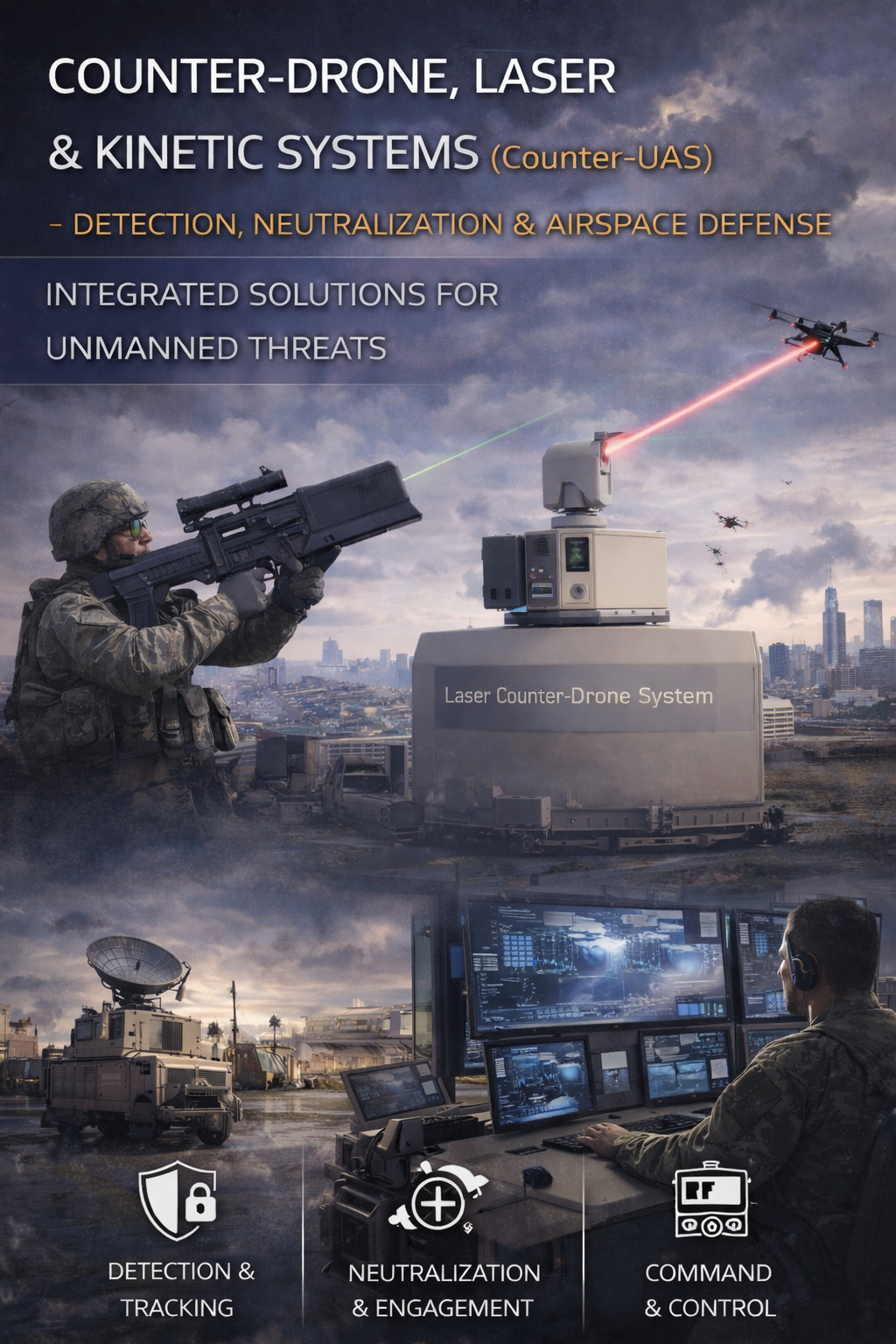
The main objective is the development of:
Layered Air Defence Against UAVs
What Counter-UAS Systems Represent
Counter-UAS systems are a комплекс of technologies enabling:
- drone detection
- identification and classification
- real-time tracking
- neutralization or control
Modern systems combine multiple technologies for higher accuracy and reliability
Core Components of a Counter-UAS System
New AI algorithms enable detection of small drones even in complex environments
AI Analysis and Classification
- drone type recognition
- behavioral analysis
- threat assessment
- automatic scenario activation
Counter-UAS systems are divided into:
1. Electronic Warfare / Soft Kill Systems
The drone:
- loses control
- returns to home point
- or performs forced landing
Spoofing / Hijacking Systems
- takeover of drone control
- forced landing
- data extraction
2. Hard Kill Systems (Physical Destruction)
Kinetic Systems
- interceptor drones
- net capture systems
- projectile systems
Interceptor UAVs
- autonomous or operator-controlled
- using:
- nets
- direct collision
- AI tracking
3. Laser Counter-UAS Systems (Directed Energy Weapons)
(including portable systems)
Advantages:
- near-unlimited “ammunition”
- low cost per shot
- extremely fast response
4. Microwave / EMP Systems
- disable drone electronics
- effective against swarm attacks
Handheld Anti-Drone Guns
- compact
- rapid deployment
- RF or GPS jamming
Operational Capability Framework (OCF)
X-Sky Dynamics provides counter-UAS solutions developed in accordance with:
- Capability-Based Planning (CBP)
- NATO Interoperability Standards
- Multi-Domain Operations (MDO)
Systems can operate alongside:
- national security systems
- radar and air surveillance networks
- electronic warfare (EW) systems
Command and Control (C2 Integration)
- centralized command
- distributed control architecture
- integration with command centers
Rules of Engagement (RoE) and Escalation Logic
Supporting:
- escalation matrix
- automated scenarios
- human-in-the-loop / human-on-the-loop modes
Modern systems combine:
2. Identification
4. Engagement (Soft + Hard Kill)
Integrated Counter-UAS Shield
Counter-UAS solutions can be integrated with:
- Dock stations
- autonomous UAV systems
- satellite platforms
- command centers
- security and monitoring systems
Industrial Sites
- protection against industrial espionage
- airspace control
Urban Security
- events
- airports
- government buildings
What X-Sky Dynamics Provides
- threat analysis
- C-UAS architecture design
- system supply (including leading Chinese manufacturers)
- integration and deployment
- personnel training
- operational testing
- maintenance and upgrades
Strategic Vision
With the evolution of drone technologies, counter-UAS systems are becoming:
a fundamental element of national and industrial security
X-Sky Dynamics delivers:
integrated, scalable and mission-ready Counter-UAS solutions, capable of operating in:
- civilian environments
- critical infrastructure
- military operations
They include a combination of:
- sensors (radar, RF, cameras, acoustic)
- AI analytics
- communication systems
- mitigation mechanisms
Detection Systems (Detection Layer)
- radar systems (short/medium range)
- RF detectors (detecting communication between drone and operator)
- EO/IR cameras (visual and thermal recognition)
- acoustic sensors
Modern systems use deep learning for high-accuracy micro-drone detection
Mitigation Methods (Mitigation / Engagement Layer)
Soft Kill and Hard Kill
RF Jammer Systems
- jamming communication between drone and operator
- blocking GPS signals (GNSS denial)
Example:
- fixed and portable systems with ranges of 12–30 km
- lightweight handheld anti-drone “guns” with range up to ~2 km
Used by:
- law enforcement
- intelligence agencies
- event protection teams
Used for:
- safe takedown
- protection of populated areas
Increasingly used in:
- military operations
- airport protection
- event security
Artillery / Airburst Systems
- programmable ammunition
- destruction through fragmentation
High-Energy Laser (HEL)
- neutralizes drones through thermal destruction
- high precision
- minimal collateral damage
- range up to several kilometers
- capable of penetrating metal components
New systems can neutralize multiple drones simultaneously using electromagnetic pulses
5. Portable Counter-UAS Systems
Increasingly popular solutions from Chinese manufacturers include:
- jammer rifles
- portable laser systems
- backpack-based mobile solutions
Systems are designed as:
mission-ready, modular and scalable Counter-UAS capabilities
Interoperability and Integration
Supporting:
- data fusion
- shared situational awareness
- multi-agency coordination
Enables:
- multi-system control
- automatic task allocation
- threat prioritization
Systems can be configured based on:
- threat levels
- engagement rules
- legal frameworks
Layered Defense Concept
1. Detection (Radar + RF + AI)
3. Tracking
Resulting in:
Integration with X-Sky Dynamics Systems
Enabling:
- automated detection
- autonomous response
- centralized control
Applications
Energy Sector
- protection of substations and infrastructure
Maritime Sector
- port protection
- vessel protection
Military Applications
- base protection
- countering drone swarm attacks
- integration with air defense systems
Key Advantages
- real-time protection
- rapid response
- high precision
- system integration
- AI automation
- cost optimization
Conclusion
Counter-UAS systems are now:
a key component of modern air and infrastructure defense
Get in Touch
[ CONTACT US ]