/ SERVICE #08
FPV Drones for Industrial Inspections, Surveys and Operational Activities
FPV Drone for maritime Industrial Inspections Surveys and Operational Activities industrial inspections, surveys of high-risk objects, and real-time operational environment assessment confined, enclosed, and hard-to-reach spaces where traditional methods are impossible or risky Specialized Applications in Maritime and Offshore Inspections survey
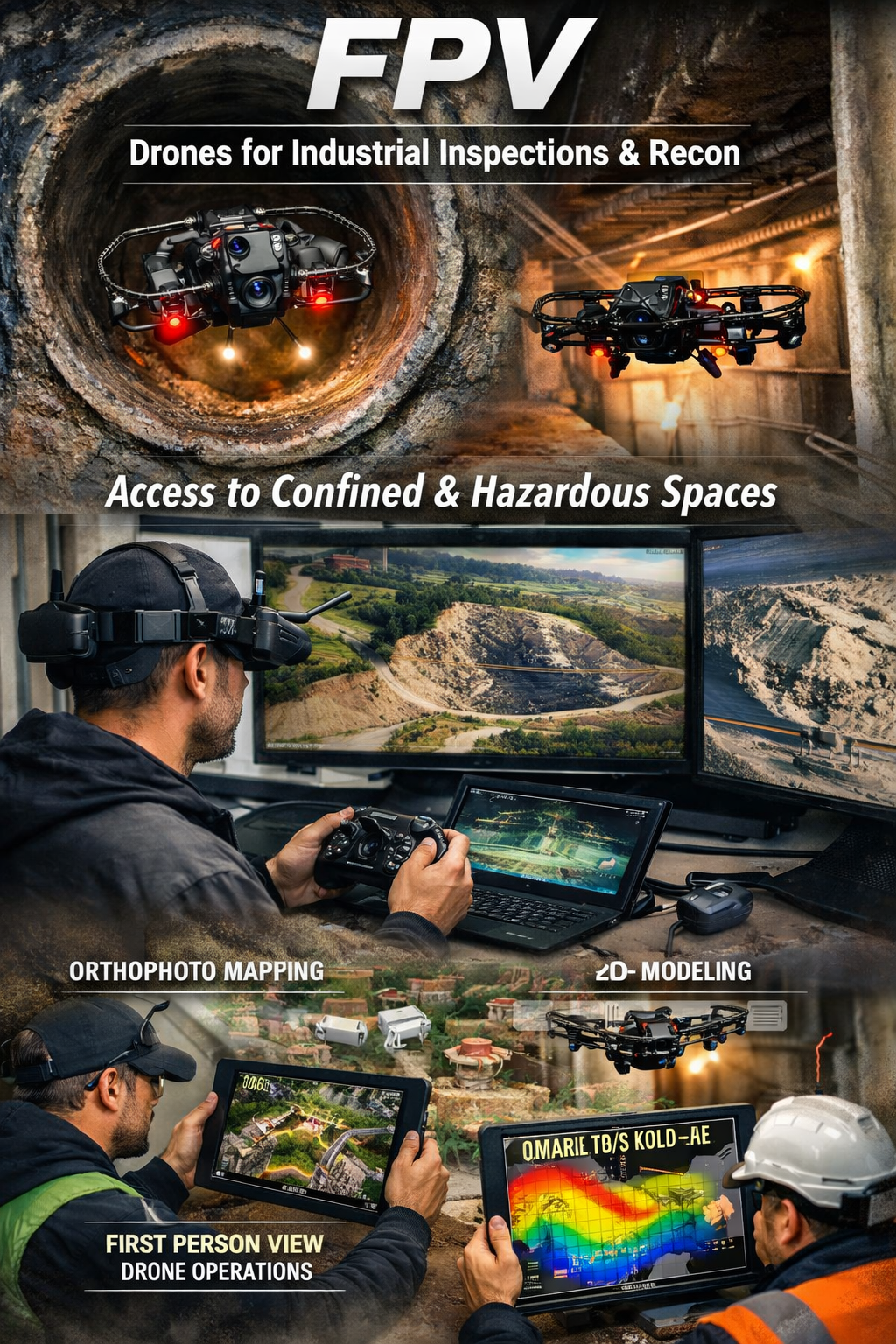
FPV technology allows drone control from a first-person perspective through specialized goggles, giving the operator full control and a sense of presence inside the inspected environment. This enables precise maneuvering in extremely confined, enclosed, and hard-to-reach spaces where traditional methods are impossible or risky. This type of system is used not only for visualization, but as a real tool for inspection, reconnaissance, and decision-making, especially in environments with restricted access or elevated risk.
Where FPV Drones Are Used in Industry
Specialized Applications in Maritime and Offshore Inspections (Extended)
FPV and similar protected drone systems from the X-Sky 3 class open entirely new possibilities in the inspection of vessels and offshore structures.
They enable safe inspections in:
- ballast tanks – complex confined spaces with limited access and gas risk
- cargo tanks and cargo holds – including environments with residual materials or low visibility
- double bottoms and internal structural compartments
- vertical shafts and narrow passages between frames and structural elements
- ship tanks and reservoirs for fuels and chemicals
Using traditional methods, these inspections require:
- scaffolding installation
- rope access teams
- confined space operations with high risk
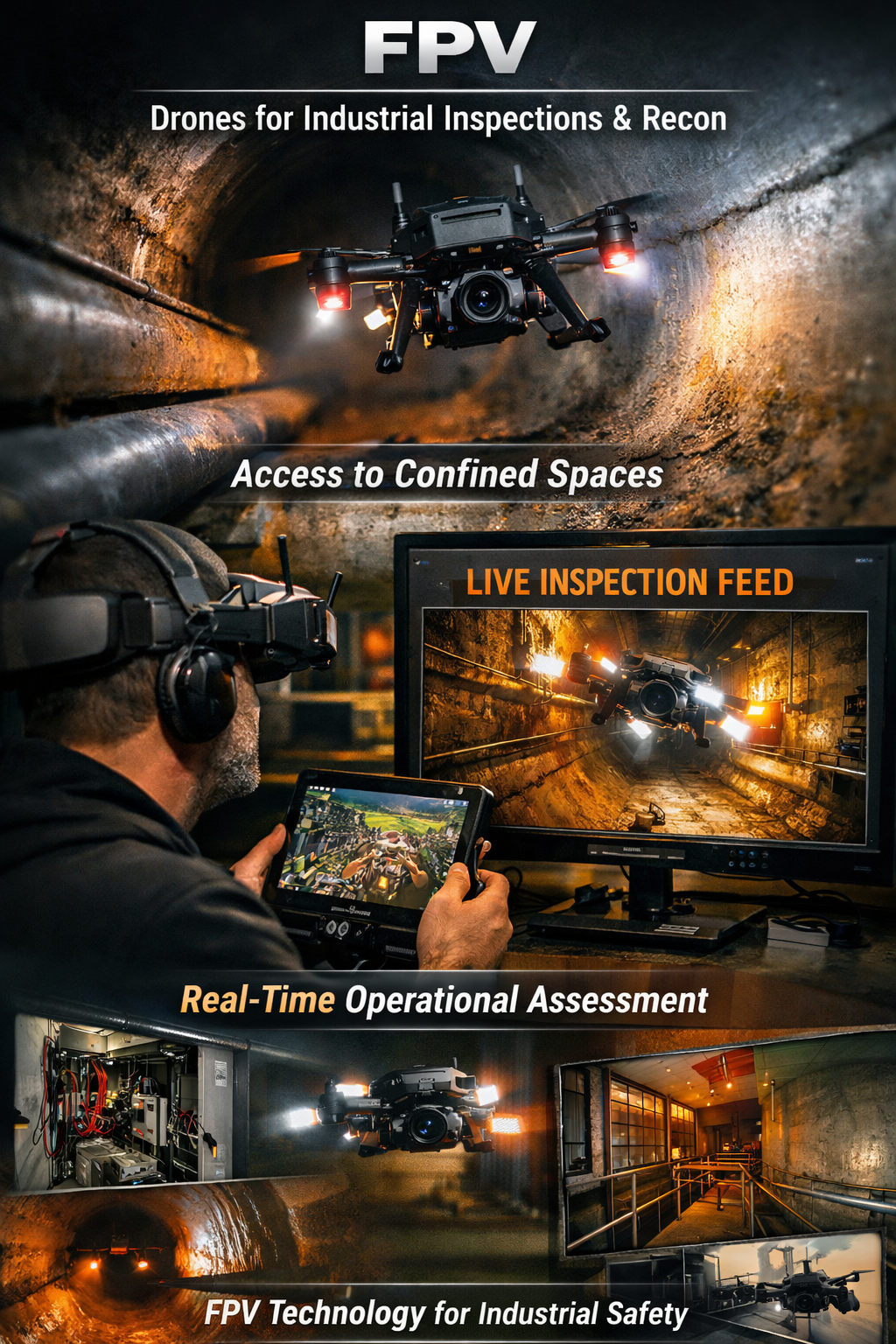
With the use of FPV/caged drones:
- the need for human entry into hazardous spaces is eliminated
- inspection time is significantly reduced (in some cases from days to hours)
- simultaneous collection of visual, thermal, and even thickness (UT) data
Systems such as X-Sky 3 enable:
- LiDAR-based real-time 3D mapping
- operation in GPS-denied environments (inside vessels)
- stable flight in complete darkness thanks to powerful lighting
- contact measurements (e.g. metal thickness for corrosion assessment) via specialized sensors
This makes these technologies particularly suitable for:
- class inspections (class surveys)
- corrosion and structural integrity assessment
- preparation for repairs and dry dock operations
- inspections without interrupting vessel operations
FPV drones provide access and inspection capabilities in locations that are:
- hazardous for human presence
- structurally unstable
- difficult or impossible to access
- confined or restricted spaces
Typical applications include:
- inspection of partially collapsed and hazardous buildings with risk of structural failure
- inspections in industrial facilities, machinery, and equipment
- inspection of internal ship spaces – tanks, cargo holds, compartments
- inspection of pipelines, shafts, channels, and tunnels
- access to tight technical spaces and equipment
- post-incident inspections after accidents, fires, and failures
- initial reconnaissance before team entry
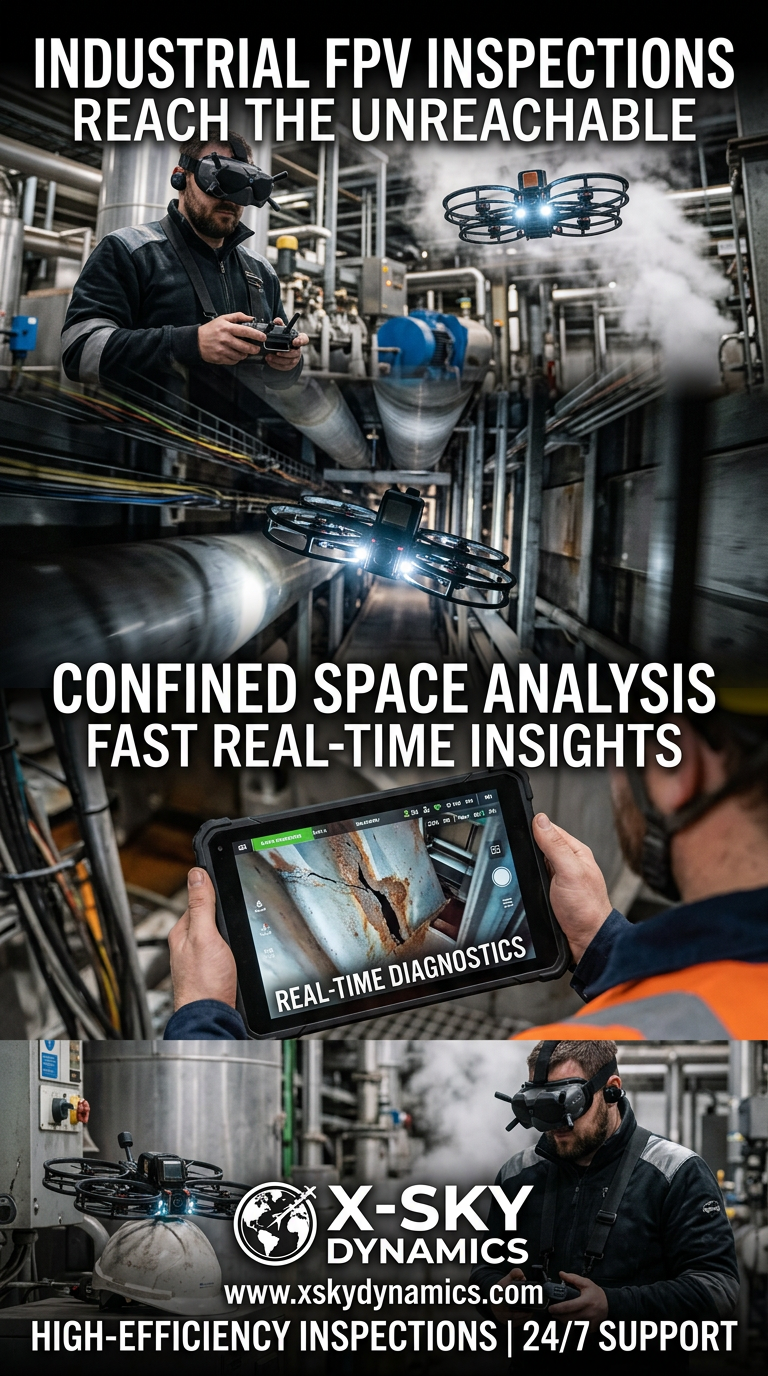
Applications in Chemical, Energy, and Heavy Industry
Chemical and Oil & Gas Facilities
- inspection of storage tanks
- inspection of pressure vessels and reactors
- monitoring of corrosion, deposits, and structural defects
- operation in environments with hazardous gases and toxic vapors
Energy Sector
- inspection of boilers, chimneys, and heat exchangers
- internal inspections of turbines and energy systems
- analysis of heat loss and structural failures
Heavy Industry
These environments are often classified as confined spaces, where human presence involves significant risks, and drones provide a safe alternative.
- inspection of silos, bunkers, and production lines
- inspections in mines, tunnels, and underground structures
- access to areas with high temperatures, dust, or limited visibility
Why FPV Technology Is Critical
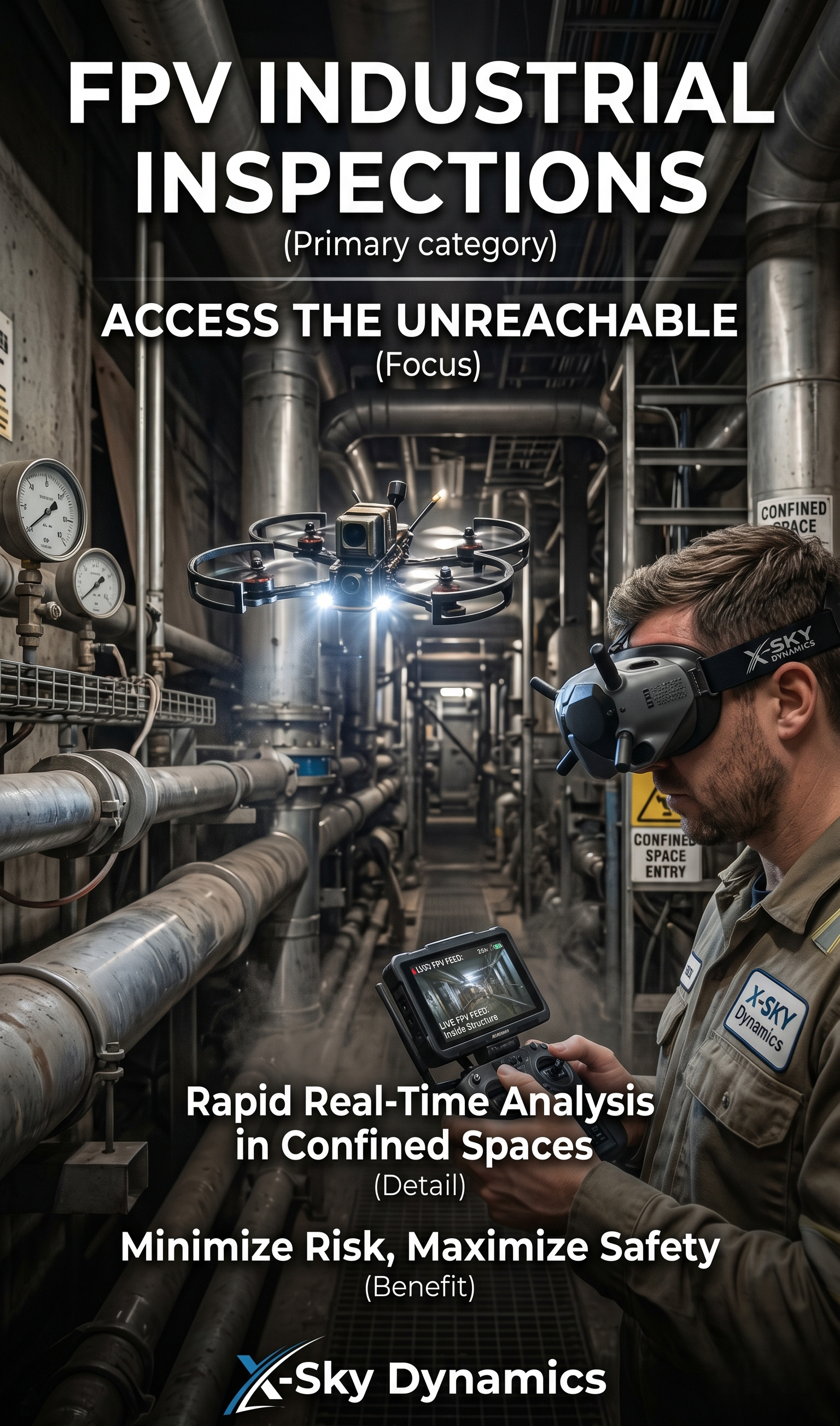
Unlike standard drones, FPV systems provide:
This makes them extremely valuable in situations where time and safety are critical.
- direct real-time control – with no latency
- exceptional maneuverability in confined spaces
- the ability to pass through openings, structures, and narrow areas
- visual access to otherwise unreachable locations
- minimal risk for personnel during inspections
Types of FPV Drones and Industrial Applications
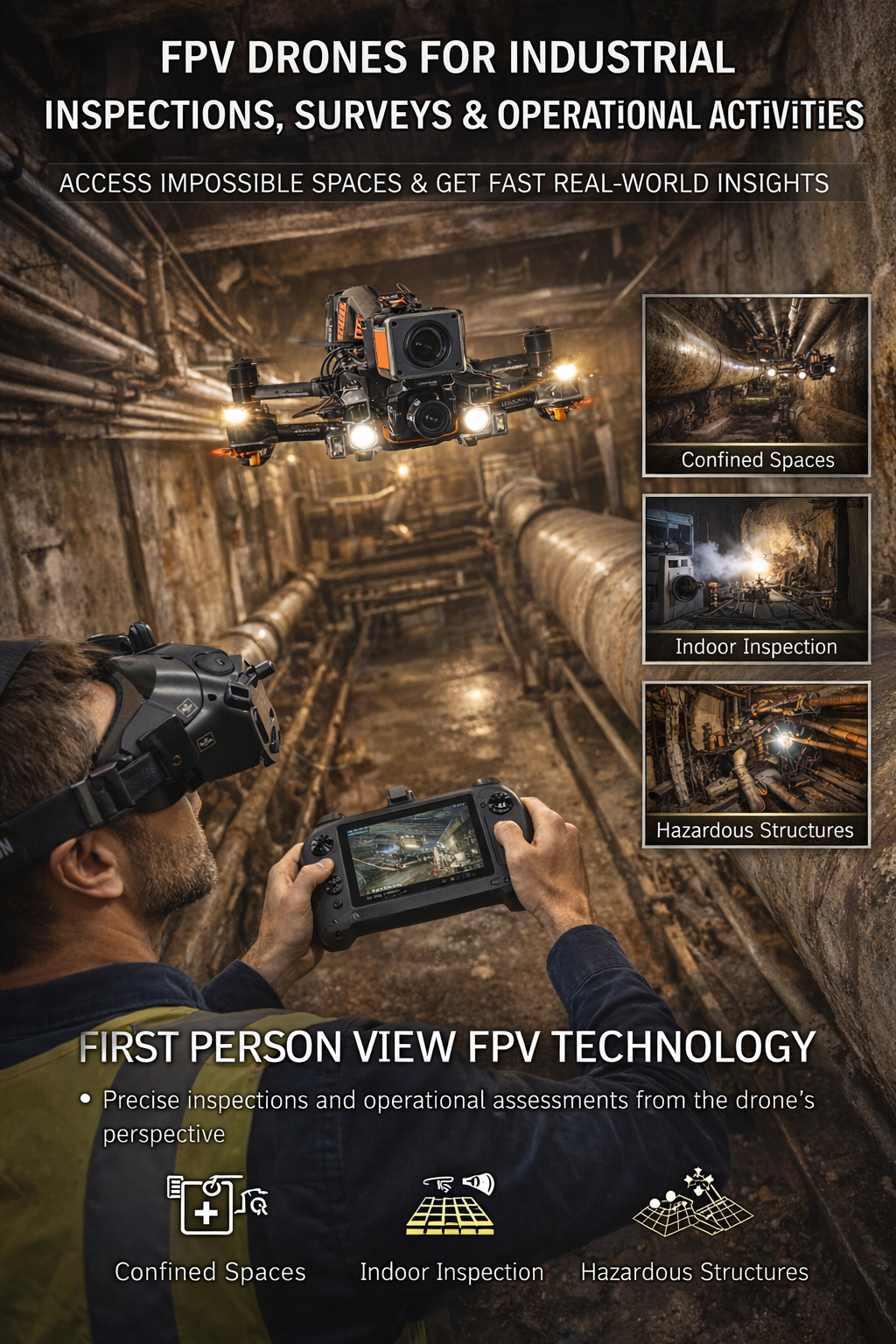
1. CineWhoop FPV Drones (for inspections and confined spaces)
- Compact, protected, and safeguarded (with propeller guards)
- Suitable for operation near structures, equipment, and confined areas
- Stable and controlled flight
Used for:
- internal inspections of buildings and facilities
- inspection of industrial sites
- inspection of machinery and production lines
- access to confined spaces without risk to operators
Particularly suitable for:
- emergency inspections
- initial condition assessment
- safe inspection prior to human entry
2. High-Speed FPV Drones (for dynamic and large-scale operations)
- High speed and maneuverability
- Suitable for covering large areas in a short time
- Used in open environments
Applications:
- inspection of large industrial sites
- infrastructure inspections
- rapid terrain reconnaissance
- monitoring dynamic processes
Extended Industrial Applications
FPV systems can also be used for:
- inspection of tanks and confined vessels without human entry
- inspection of ship cargo holds, ballast spaces, and structural elements
- damage assessment after fires and incidents
- inspections in low-visibility environments (dust, smoke, low light)
- reconnaissance in search and rescue operations
- integration with thermal sensors for detecting heat anomalies
- access to vertical shafts, chimneys, and industrial installations
Technical Specifications and Capabilities
- Range: up to 7–8 km in line of sight
- Control: real-time via FPV goggles
- High maneuverability and control
- Operation in confined and enclosed environments
- Video quality: up to 4K/6K (depending on configuration)
- Capability for integration with additional sensors
Key Advantages
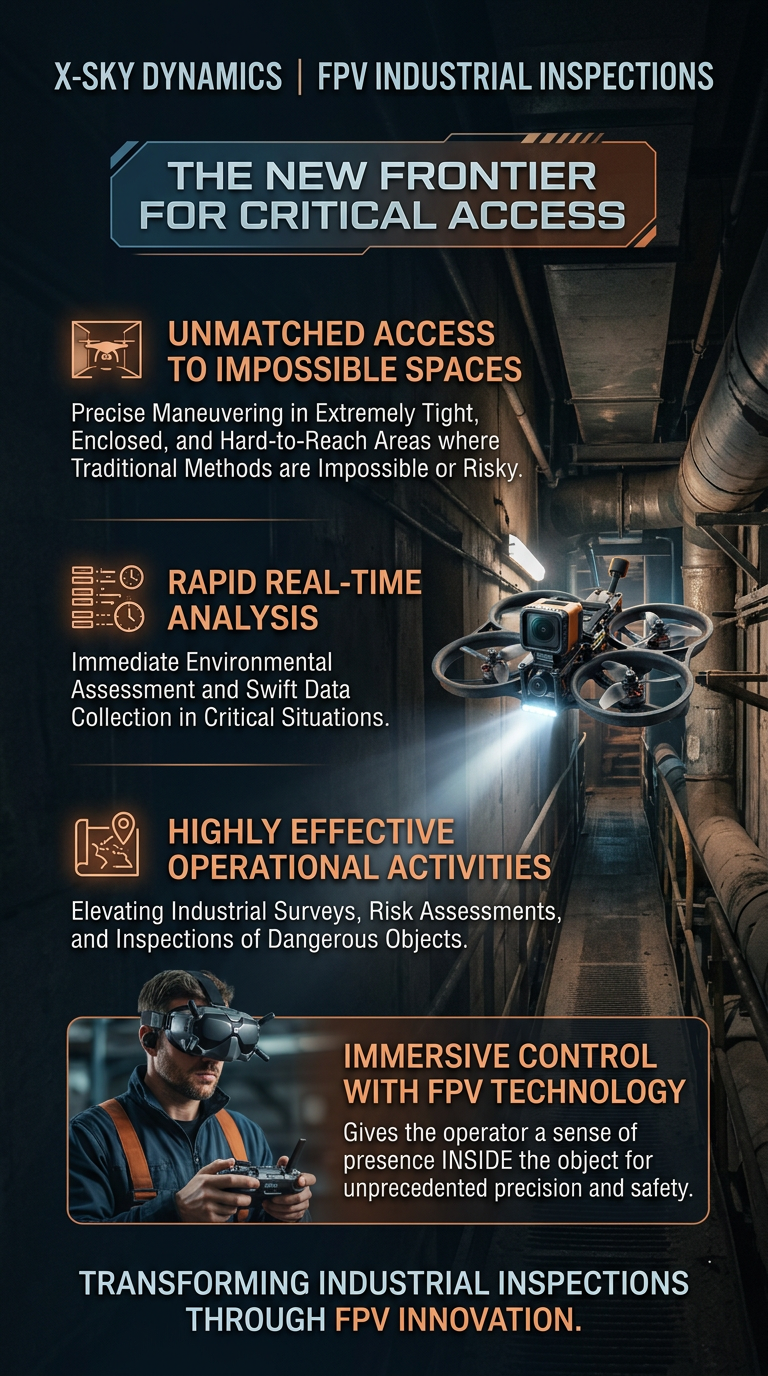
- Safety – eliminates the need for human entry into hazardous environments
- Speed – immediate access and inspection
- Precision – detailed visual control
- Accessibility – reaching otherwise impossible locations
- Real-time data – on-site decision-making
Integration with Other Technologies
FPV drones can be combined with:
This enables building a complete operational picture of the объект – from general overview to detailed internal analysis.
- standard inspection UAV systems
- thermal cameras
- LiDAR and photogrammetry
- real-time monitoring systems
Why X-Sky Dynamics
Pilots with real experience in complex and high-risk environments
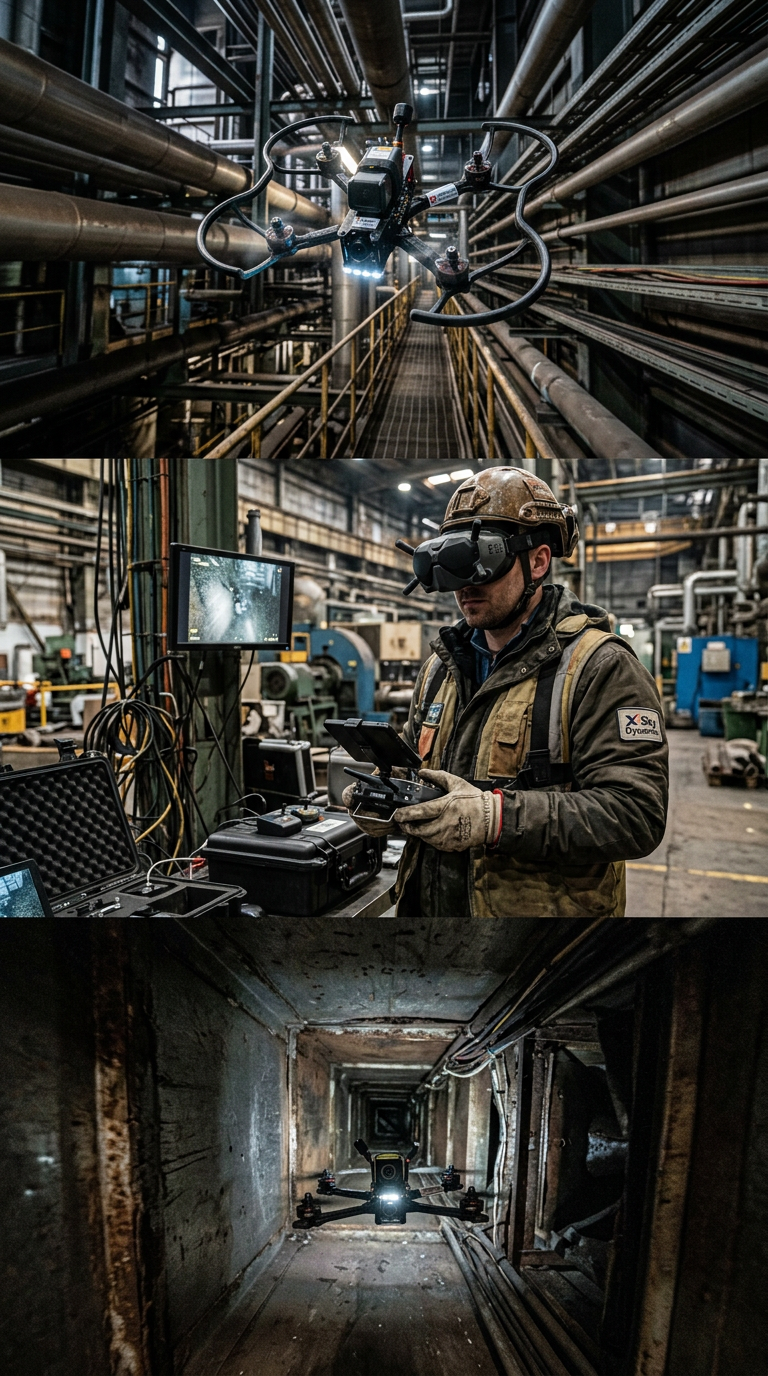
Specialized FPV platforms for industrial applications
Capability to operate in confined and hazardous spaces
Integration with other drone technologies and analytical systems
Mission planning and execution focused on safety and efficiency
Conclusion
FPV drones are no longer just a visualization tool, but a key technology for industrial inspections, safety, and operational analysis. They provide rapid access to critical information in environments where traditional methods are limited or high-risk.
Get in Touch
[ CONTACT US ]